
Iran has launched a wave of retaliatory missile strikes across the Middle East after the United States and Israel carried out coordinated air raids on multiple cities in the Islamic Republic, including the capital, Tehran.
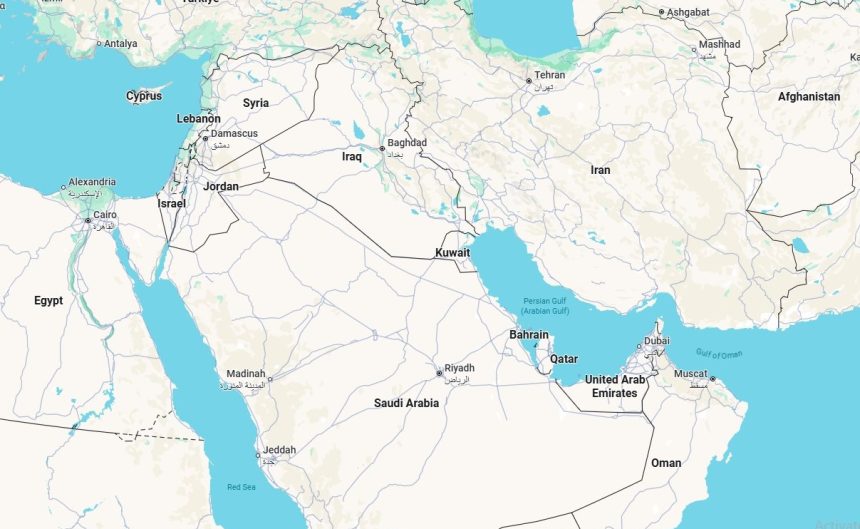
Local and international media reported that Israel conducted the initial attacks on Iranian cities on Sunday morning. This prompted the Iranian authorities to respond with missile strikes targeting Israel and US bases in West Asia, specifically in Saudi Arabia, the United Arab Emirates, Kuwait, and Qatar.
Soon after the Israeli attacks, US President Donald Trump said that “major combat operations are under way” and called on the Iranian people to pursue regime change.
In a video posted on his social media platform, Truth Social, he urged Iranians to “take over” their government, claiming, “it will be yours to take. This will be probably your only chance for generations.”
According to reports, the Israeli strikes on Iran targeted senior Iranian figures, including Supreme Leader Ayatollah Ali Khamenei, Armed Forces Chief of Staff Sayyid Abdolrahim Mousavi, and President Masoud Pezeshkian.
Broadcaster CNN, citing Israeli officials, reported that other targets included Ali Shamkhani, the secretary of Iran’s newly established Defense Council, and Ali Larijani, the secretary of Iran’s National Security Council.
The Israeli Defense Forces have since confirmed that Iran launched retaliatory strikes. Iran’s Revolutionary Guards also claimed that it had initiated its first large-scale wave of retaliatory missile and drone attacks towards Israel.
These attacks follow a series of negotiations between the US and Iran over Iran’s nuclear program. The Trump administration has been increasing pressure on Tehran to agree to a new deal. On Friday, President Trump expressed dissatisfaction with Iran’s position during the talks.
Iran’s foreign ministry, however, claimed it was aware of the “intentions” for an attack but chose to continue with nuclear negotiations nonetheless.
As tensions escalate in the Middle East, global leaders are calling for restraint in an effort to prevent a wider regional conflict.
Iranian media outlets reported that the Islamic Republic initiated its military response less than two hours after the airstrikes on Tehran and other Iranian cities, launching missiles and drone attacks on what it termed “Israeli targets in the occupied territories.”
Explosions have been reported in Tel Aviv, with air raid sirens activated.
Israel’s war minister described the Israeli actions as “pre-emptive,” while President Trump said the US initiated the attacks to “obliterate” Iran’s missile and nuclear programmes.
This marks the second time Washington has attacked Iran during a period of diplomatic negotiations.
Iran has signaled its intention to continue pounding Israel, US bases in West Asia, and US naval assets in the coming days.
It may also attempt to close the Strait of Hormuz.
“As we have already stated, any base anywhere in the region that assists Israel will be a target of the sacred Islamic Republic and our armed forces, and we will show no hesitation,” Senior Armed Forces Spokesman, Brigadier General Abolfazl Shekarchi, told local media.
Following the attacks, most Gulf states closed their airspace to commercial airliners and are reassessing the security situation.
The European Union’s foreign policy chief, Kaja Kallas, called the developments “perilous.” “Protection of civilians and international humanitarian law is a priority,” she said on X after speaking by phone with Israel’s senior officials.
Russia has called for an immediate halt to the attacks in the Middle East, urging that the situation be “returned to the path of political and diplomatic settlement.”
In a statement, the Russian Foreign Ministry said the international community should swiftly deliver an objective assessment of what it called irresponsible actions that risk further destabilising the region.
It added that it remains ready to assist in efforts to find peaceful solutions based on international law, mutual respect, and a balance of interests.
Switzerland’s foreign ministry said it is “deeply alarmed by strikes”. It called on “all parties to exercise maximum restraint, protect civilians and civilian infrastructure.”
Malaysia’s Prime Minister, Anwar Ibrahim, said that the US and Israeli strikes on Iran “bring the Middle East to the edge of catastrophe.” He urged Washington and Tehran to “pursue a diplomatic off-ramp rather than further escalation.”
Australia’s Prime Minister, Anthony Albanese, said his country “support(s) the United States actions to prevent Iran from obtaining a nuclear weapon.” In a post on X, he added that “Australia stands with the brave people of Iran in their struggle against oppression.”
India’s embassies in Israel and Iran have advised Indian nationals in those countries to “exercise utmost caution,” avoid unnecessary travel, and monitor the situation closely