


Dhaka –The International Crimes Tribunal has sentenced to former cops to death and three others to life in prison for the killing of an activists whose death had sparked widespread outrage among students and the general public causing a mass uprising that ousted the former prime minister Sheikh Hasina in 2024.
A three-member panel of judges at the International Crimes Tribunal, a specialized court in Dhaka, led by Justice Nozrul Islam Chowdhury handed down the verdict in the killing of Abu Sayeed in a crowded courtroom in Dhaka on Thursday.
The court also convicted 25 other defendants to various jail term for their roles as the investigators press charges against a total of 30 individuals, according to prosecution lawyers.
Of them, 24 are on the run, and six are in custody under arrest.
Syeed, a student of English department at Begum Rokeya University of Rangpur, was killed in police shooting near his campus on July 16, 2024 when Bangladeshi students were protesting on the street to demand an end to public job quota system.
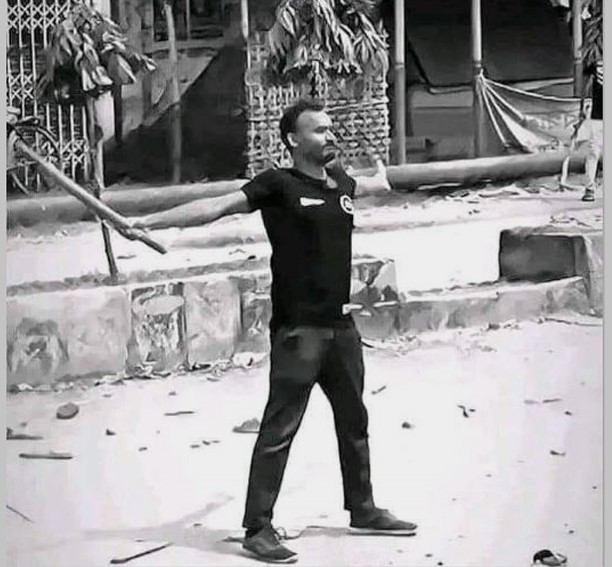
Footage of the police shooting Syeed as he stood with both arms outstretched with a stick holding in one of his hands was broadcast by the news media. That video went viral on social media, causing widespread outrage among the protesters.
The protests then spread across Bangladesh and eventually turned it into a one-point demand of resignation of the government of Hasina.
The government had imposed curfew in the following days as the protests turned more violent every day, and amid fierce protests with more people joining daily, Hasina stepped down on August 5, 2024 and fled to neighboring India.
An interim administration headed by Nobel laureate Muhammad Yunus, which took over following Hasina’s ouster, amended laws to bring the uprising-related violence as crimes against humanity. It accused the Hasina government of committing crimes against humanity by brutally suppressing the uprising events.
Then it took the decision to try those crimes in the special tribunal, the International Crimes Tribunal, which was originally set up in 2010 by Hasina to prosecute crimes committed during Bangladesh’s 1971 liberation war. Local collaborators of the Pakistani forces responsible for unleashing atrocities on unarmed civilians during the nine-month war were brough to justice through the ICT.
The tribunal, in November, tried Hasina in absentia and sentenced her to death for the brutal suppression of the uprising, which according to an UN estimate, killed some 1,400 people.