
Early warning systems for climate disasters have made big progress worldwide. But serious gaps remain between regions. Millions of people are still at risk from climate change. This is according to data released at Earth Information Day at COP31 in Turkey.
The Early Warnings for All initiative was launched in 2022 by UN Secretary-General António Guterres. It aims to protect everyone on Earth from hazardous weather, water, or climate events. The target is to reach this goal by the end of 2027.
The UN says these systems are urgently needed. Climate change is causing more frequent and intense extreme weather. This leads to widespread harm and loss for nature and people.
The systems are proven, efficient, and cost-effective, the UN says. They save lives, jobs, land, and infrastructure. They also support long-term sustainability.
But data from the 2026 Global Status of Multi-Hazard Early Warning Systems report shows mixed results. Global completeness scores rose from 0.353 to 0.559 in 2026. That is about a 50% increase.
Despite this progress, 20% of the world's people still have no access to any early warning system. That is one in five people. Most importantly, over one-third of the global population cannot take protective action. This is due to many limitations. Yet 80% of people affected by disasters receive at least one advance warning.
Income disparity is another major factor. Data shows 71% of warned people take action in high-income countries. The figure is only 48% in low-income nations. It is 47% in lower-middle-income nations.
Between 2015 and 2025, disaster-related deaths and missing persons averaged 0.8 per 100,000 globally. But the number soared to 2.8 in Small Island Developing States (SIDS). It was 2.0 in Africa and 1.8 in Least Developed Countries (LDCs), according to UN data.
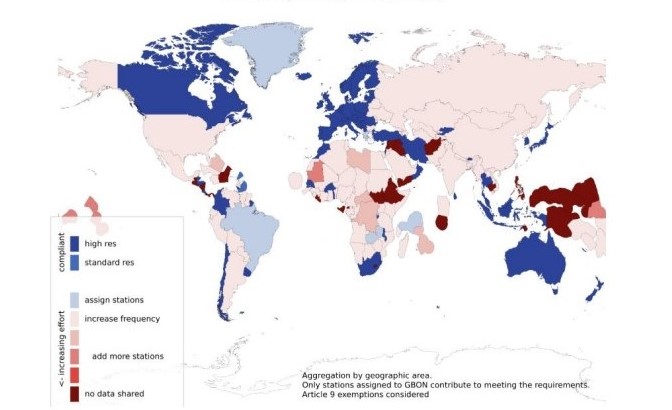
The data shows regional progress. Europe and Central Asia led with 0.630. The Asia-Pacific region followed with 0.596. Africa (0.510), the Americas and Caribbean (0.510), and Arab States (0.490) continue to lag behind.
Currently, 50 countries are actively developing or implementing national roadmaps. These fall under the UN's Early Warnings for All (EW4All) initiative. The initiative was launched by UN Secretary-General António Guterres. It mandates that every person on Earth be protected by early warning systems.
UN leaders stressed that early warning systems remain the most cost-effective protection against growing climate disasters. They urged faster investment in vulnerable regions.